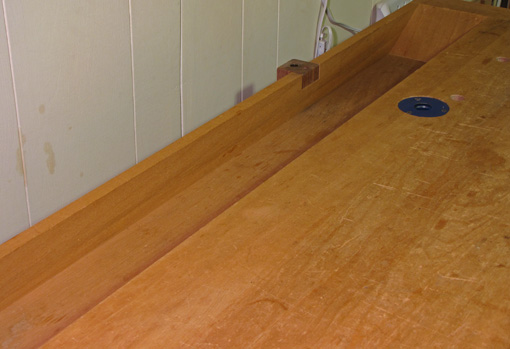
This is really a matter of opinion and personal work habits, but I would like to make a case for the humble workbench tool well. The bench that I have used for more than 25 years has one and I would feel awkward working without it. Here’s why.
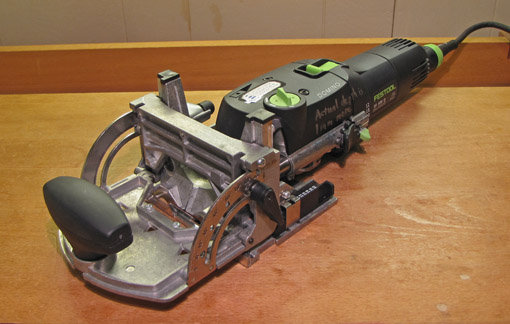
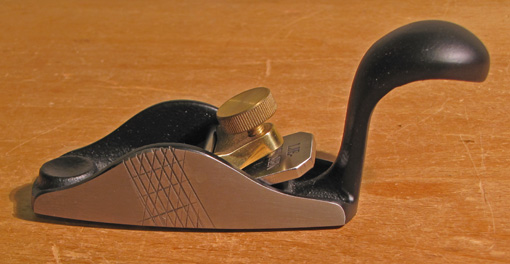
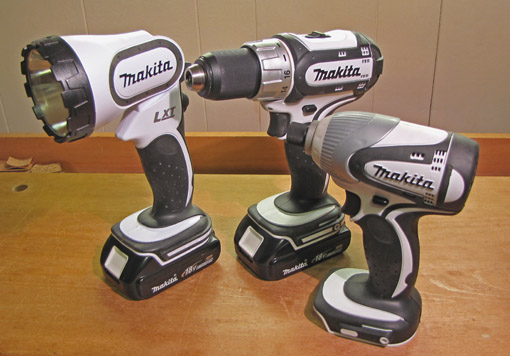
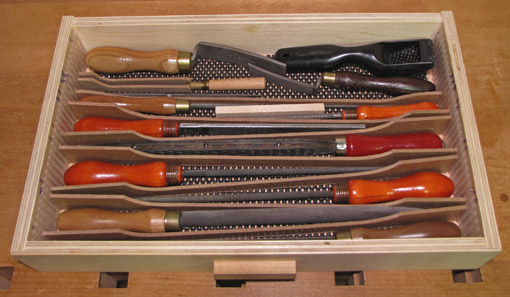
The tool well is a place for tools, small parts, and other sundry items not in immediate use while working at the bench. When placed there, the items are protected from bumps and dings because they lie below the level of the work surface. Think about vigorously jack planing a board, pushing the plane in various directions, and the possibility of the toe of the plane crashing a square, gauge, or straightedge. Ouch. Working a curve with a rasp, sawing joints, and paring with a chisel are other examples.
Of course, the tool in hand may also be damaged from such collisions.
Without a tool well, it will actually take up more space to place the unused tools on the work surface at a safe distance to create sufficient clearance from the work at hand to avoid feeling inhibited. Thus, the tool well saves, not wastes, space.
The work on the bench surface is likewise protected from the items in the well, such as chisels. Wood parts are rotated, pushed, and otherwise manipulated on the work surface and you want to avoid unintended meetings with tools.
The outer edge of a tool well at the end of the width of a bench should be flush with the work surface. Thus, for most purposes, the bench width effectively includes the width of the tool well. The same is true of a well in the middle of the bench width. The inside of the well on my bench is 5 1/4″ wide and 2 3/8″ deep.
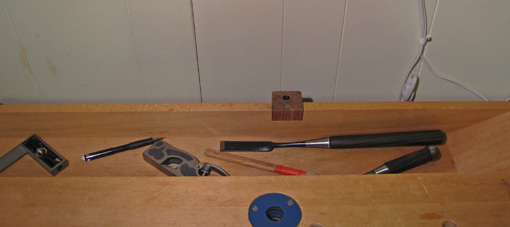
Of course there are some disadvantages to the tool well. Tool wells at the end of the bench width prevent most clamping in that area. Also, there is less continuous flat area on the bench. (Though Bob Lang has a clever solution to this in a bench he designed and is detailed in Popular Woodworking.)
The disadvantage that seems to be stated most often, that the tool well collects dust and debris, is not a disadvantage at all. Yes this does happen, but I would rather the debris, such as chips from chopping joints that didn’t get swept to the floor, be out of the way in the well than sit on the work surface. Anyway, it’s no big deal to sweep out the well since there is a handy ramp at one or both ends.
So, for woodworkers who are buying, building, or upgrading their workbench, these are some considerations to keep in mind and which I hope will be helpful. There are many bench designs and many excellent sources to study. Decisions are ultimately personal, so go with what seems right for you and enjoy every minute at the bench.