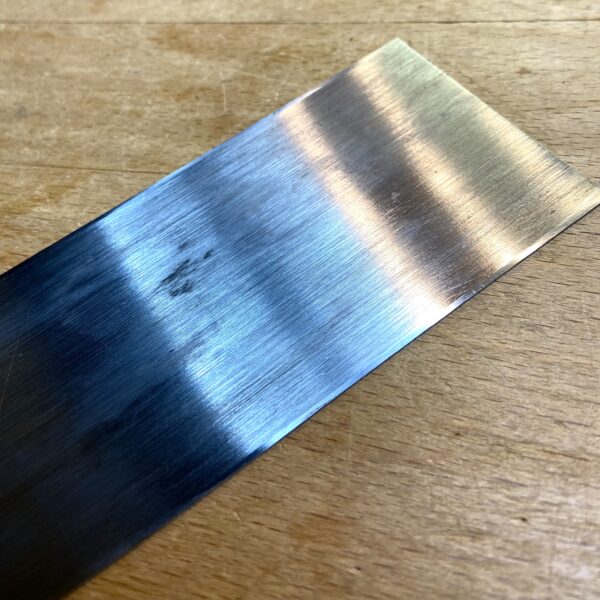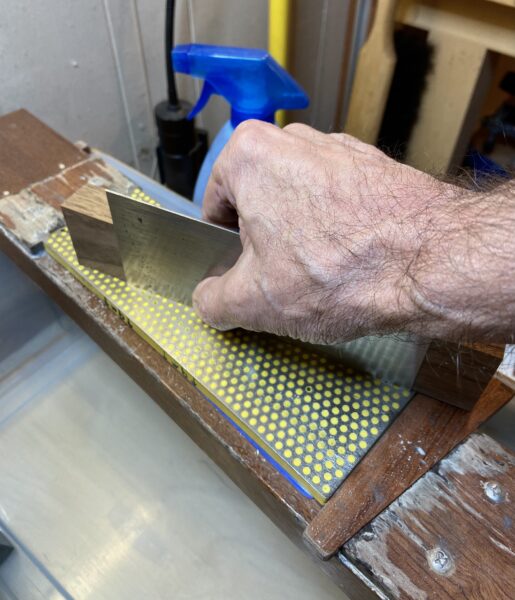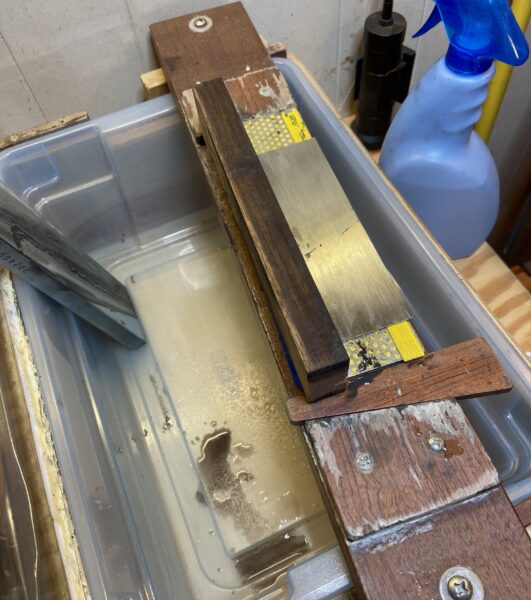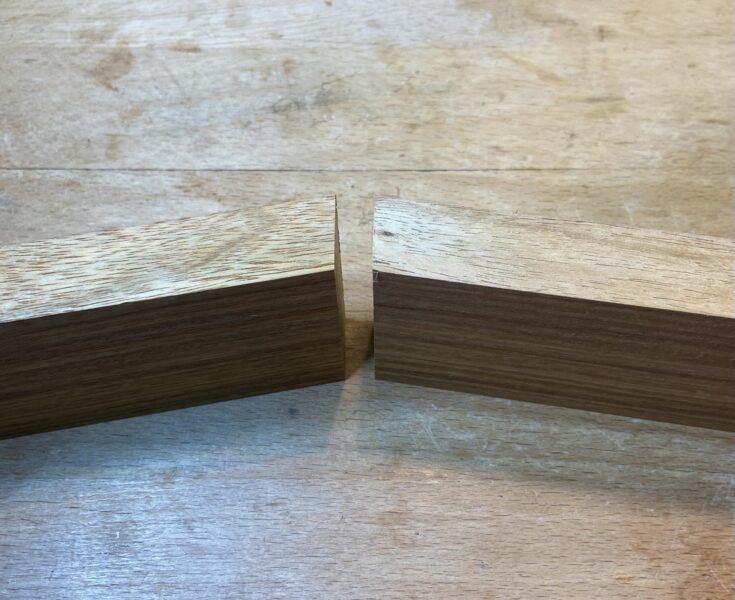
At this point, I switch from the sharpening station to my scraper set up that I have described in a recent previous post. That rig has been working for around 40 years and still going strong.
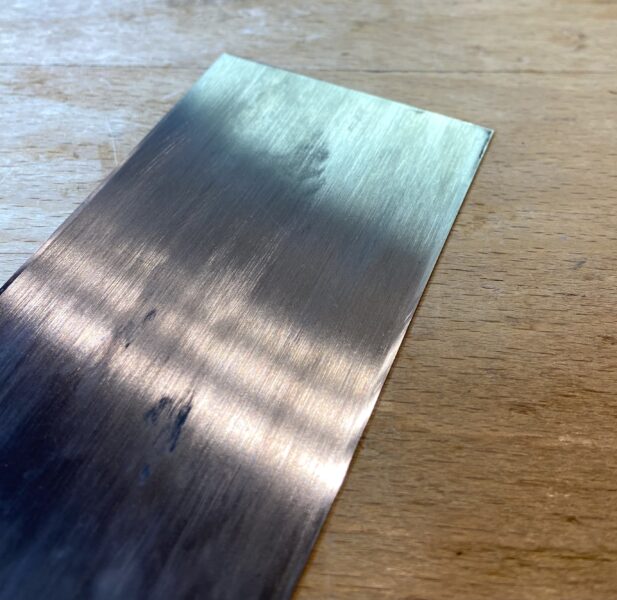
It pays off to first use your burnisher (you can read about what I use from a few posts ago) to push and stroke the flat side of the scraper. Keep the edge as close to flat as you can, without being totally in contact of the full width. It is really only touching near the edge. Go back and forth several times with moderate pressure.
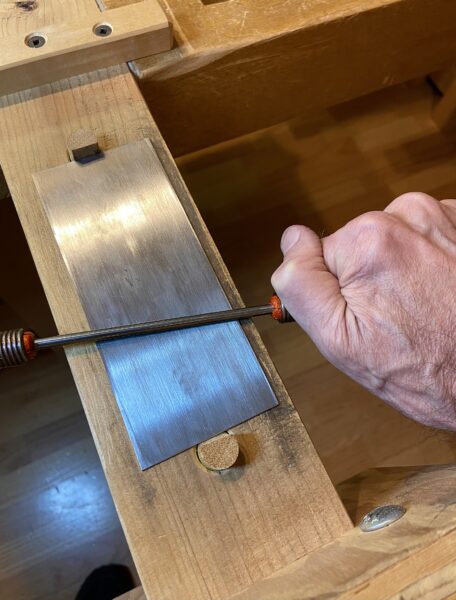
Finally, it is time to burnish the edge you will use for scraping. As seen in the photo below, the scraper is securely clamped with just a short amount exposed. The burnisher is pushed and/or pulled the full length of the edge with moderate pressure.
I find it very helpful to move across some of the length of the burnisher as I push or pull it. I find this creates the scraper’s cutting edge better.
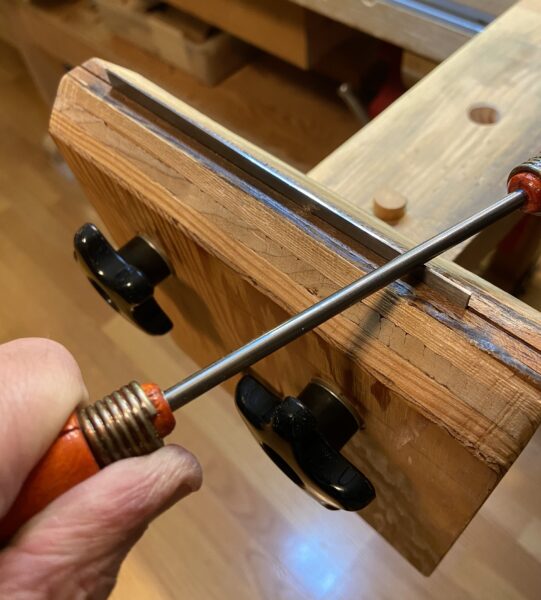
It is important to set the angle and keep it consistent throughout the stroke. But at what angle? I have changed over time, back and forth, and realize there are many good choices.
I think about 5° is a good starting practice, and is what I generally prefer now. Note that as you go more steep, the scraper must be held and worked at a stepper angle to cut the wood. That starts to reduce your scraping ease and hand power. 15° is the maximum practical angle. 10° is overall better. I have seen as little as 1-2° recommended.
I set my angle at the beginning with my Wixey angle gauge. The real key is to be consistent throughout the burnishing stroke. This will make the scraper yield a consistent cutting effect for the width of the scraper as you work.
After using the scraper for a while, you can resharpen it by just redoing the final steps (i.e., what is in this post). No need to redo the sharpening stone work. Use the burnisher to flatten the curled edge by compressing against the flat side of the tool. The burnisher is held just a trace less than fully flat against the flat side of the scraper.
Then burnish the edge as you did before. You can even readjust the angle. After about three times, redo the whole routine again. It will be easier than at the start.
I hope this has been useful to support, alter, or even begin your work with this very handy tool – the cabinet scraper. It is not a mysterious or difficult tool to prepare and use! Happy woodworking!