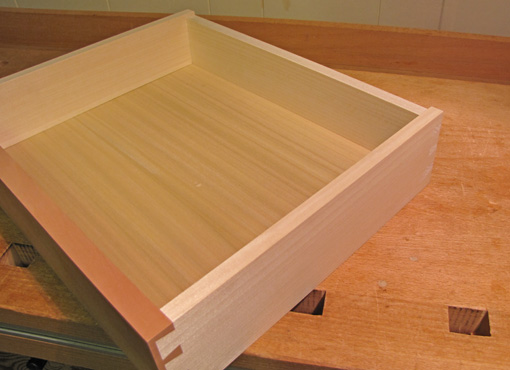
I usually approach the completion of a project with hesitancy because I know that, for better or for worse, this is as good as the thing is going to be. I no longer can do anything to improve it, except for marketing, and must accept it. Competing with this is the sense of wanting to get the damn thing out of the shop because I’ve already put enough sweat into it.
Another, more important, very distinct, feeling comes over me. Readers, maybe you can relate. I have a sense of separation from the piece. It is now out of my hands and has a life of its own without any further influence from me. It feels almost as if someone else might have made it.
Well, isn’t that the point of creativity, to make something that stands on its own and is appreciated for what it is apart from its maker? Yes, attention is rightfully now on the object, not its maker. People will, to varying degrees, like or dislike the object. The object is not you, so don’t take the praises or winces too personally. Even though you made it, in this sense it’s not yours anymore and doesn’t need you. Hopefully, it will even outlive you.
This view is in contrast to that of the painted, pierced chic “arteests” of today who seem to prefer that everyone dwell on them more than on what they have made. I believe that we as artists (artisans, craftsmen, woodworkers, whatever you prefer) should be humbled by the degree of mystery that lies in making things.
Yes, this work is personal, but consider the words of James Krenov, “. . . the worth of such things is their whole content . . . [to be] seen – and lived with, in a coming together of sense and observation that will bring quiet joy long after the maker is forgotten.”
It is good to build good things.