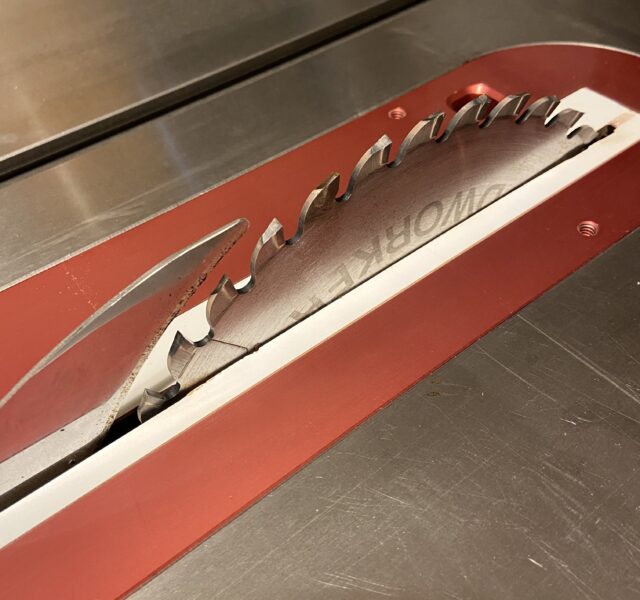
A machine will more readily move rather than cut a piece wood, given the chance. If you are holding the piece of wood with your hand, the hand may go with the wood, maybe to the cutting blade.
Compare the action of a coarse rasp with a machine. Consider the work piece just sitting on the bench top, without a gripping or movement-blocking device. As you push the rasp on the wood, it will push the piece of wood. Alternatively, if you clamp or block the movement of the wood, the rasp will cut it as you want. If you grip the wood only with your hands anywhere in the pathway of the rasp, you may rasp your skin, even seriously.
Mentally transfer the situation to a machine of vastly higher power and speed than rasping. If you allow the machine cutter the opportunity to push the wood without its position and movement physically governed, there is a very good chance the machine cutter will take the opportunity to push and/or throw the wood rather than cut it. The speed and power of this is more than you can avoid.
The wood may be thrown at you. Probably worse is if your hand is griping or riding the wood. The sudden throw or push of the wood can take your hand with it and might push or pull your hand right into the blade! This is all likely to be far faster than you can react to save your hand.
Consider some examples. Without a side fence or cross-cut fence, the table saw blade may through the wood rather than continuously cut it. An cutoff piece within the confine of a blade and fence is easily thrown by the blade. The thrown wood or the grabbed wood with your hand on it can be very serious.
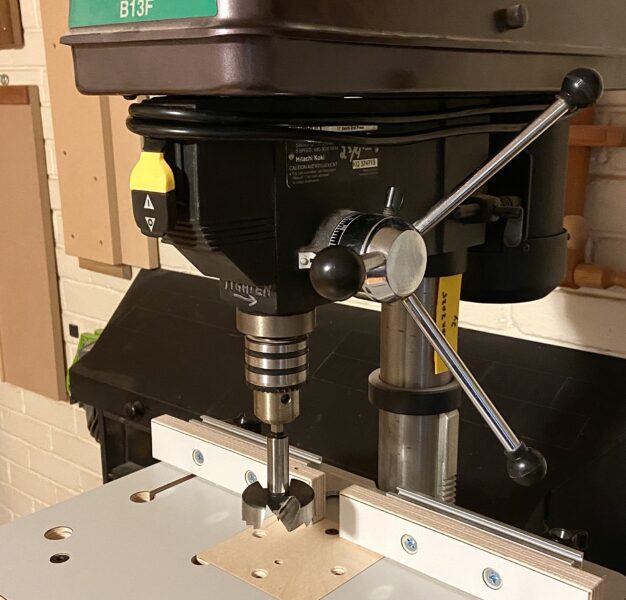
A drill press, especially with a large diameter bit, may grab and throw the wood piece in a spin as it gets into the cut. Attempting to hold the wood only with your hand may bring the hand into the blade faster than you can avoid.
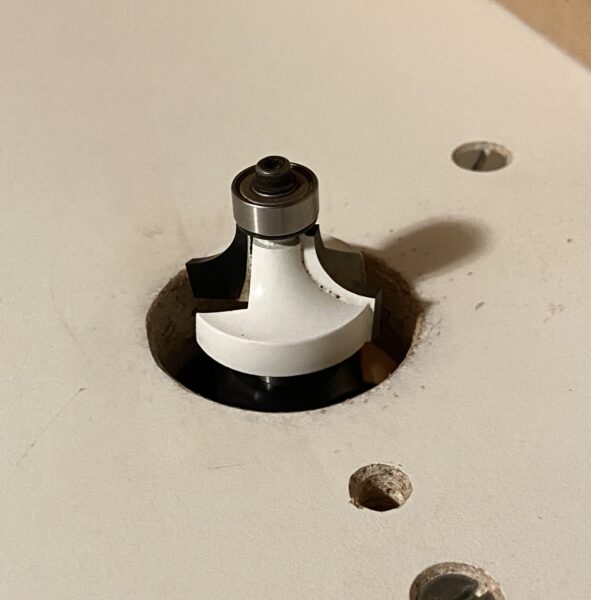
Router tables can do a number of dangerous things. The blade is rotating counterclockwise from your view. Without a fence and/or other blockers in the appropriate place(s), and without appropriate direction of feeding the wood, the blade edge can snatch the wood amazingly fast. This is particularly true of large diameter blades cutting deeply. The hand holding it may go to the cutting blade.
Bandsaws are less likely wood throwers because the cutters are pushing the wood down onto the table, and so they cut it instead. One danger is lifting the wood by holding it off the table as you put it into the blade, such as for a curved cut. Maybe it can be done (and you can find famous examples) but I would never to it.
We could go on with many other machine throwing and hand-pulling examples.
The key is to understand that almost any machine-moving blade is much faster and more powerful than you! It will likely take its opportunity to throw, push, or pull and it does not matter what is in the way – including any part of you.
Understand that this is not a “step-by-step” or “cover-it-all” safety instruction. It is a useful starting point to understand how woodworking machinery can create many of its dangerous situations.
It is one part of learning safety. We must understand much more, read, and prepare before working with machinery. Then plan, and only then do the work.
Stay safe!
