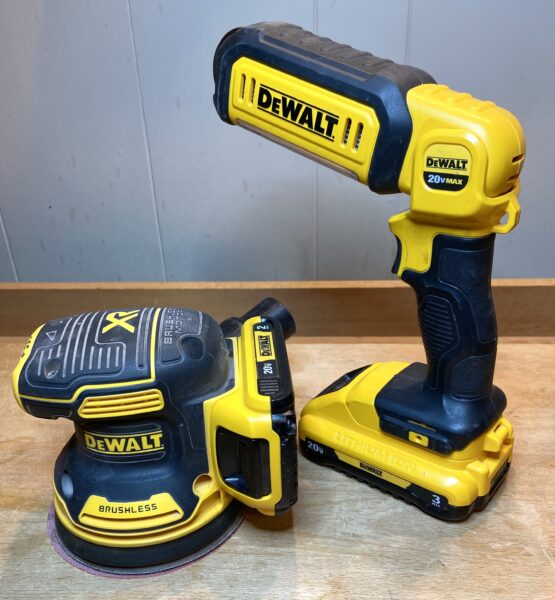
To finish this series, here is a suggested list of the remaining tools to add to the shop as it builds.
1. Cordless hand-held power sander. The 5” diameter is the most versatile and practical. I like the 3M Xtract Cubitron II Net Disc 710W sanding discs.
2. Flashlight. Cordless in the brand you choose to share 20V batteries and chargers. This functions much more often than expected.
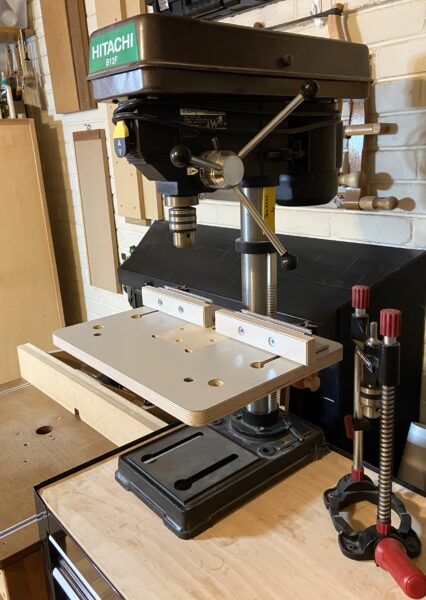
3. Drill press. The bench top model with 2 3/4” depth of cut and small table has done everything I have needed. A floor model is much more expensive. (Please see the brief safety notes in some of the previous posts in this series. Safety is critical for drill press work too.)
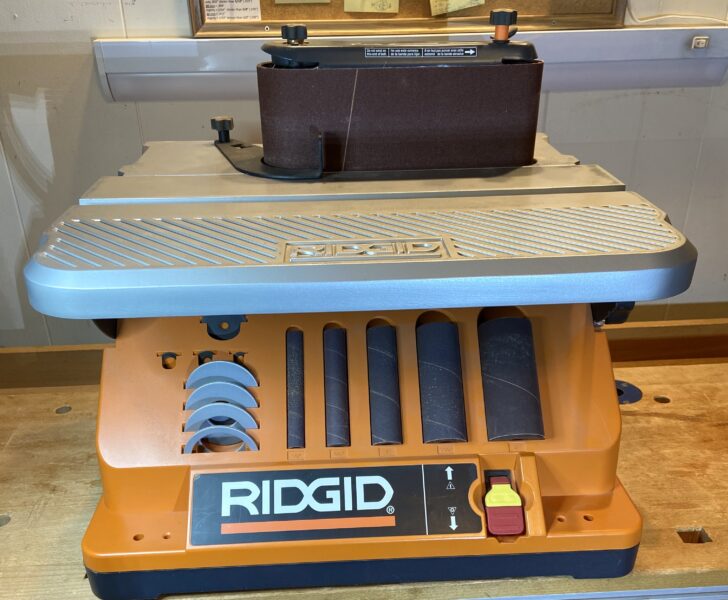
4. Belt/spindle/disc sanding machine. There are many varieties in this group of machines, so it probably is best to chose as your creative interests evolve. I have a Ridgid.
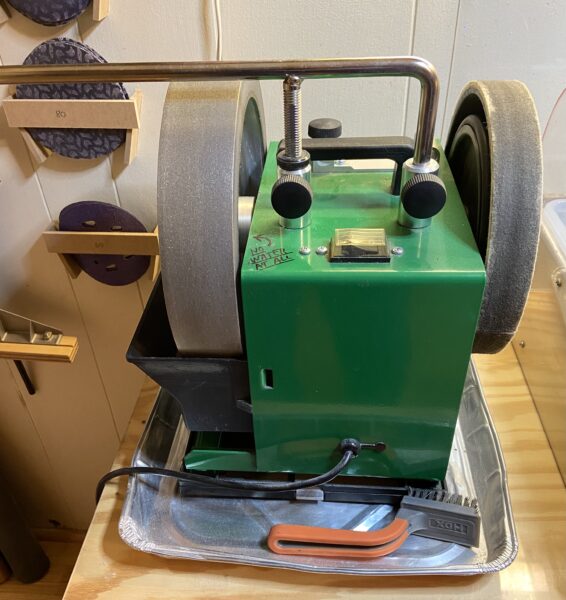
5. Grinding wheel for part of the sharpening process. I have had the Tormek for a long time and modified it. I do not think it is necessary to spend nearly the cost of it. Spend a lot less on the machine and put in a CBN wheel.
6. Biscuit joiner. Not big on the list but it is handy for some light joinery and edge-to-edge joinery.
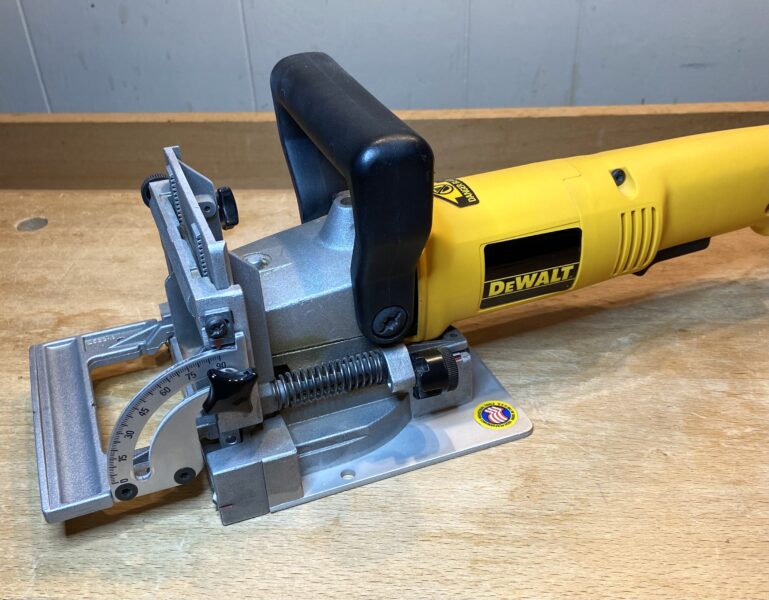
Two machines that are absolutely essential or totally unnecessary. It depends on your construction interests.
6. Lathe. I have never used one! It simply is part of woodworking that I do not do. I see my friend Rob’s incredible, beautiful work, so it is tempting, but the shop is out of space and there is only so much I want to do. Look around and follow your interests.
7. Scroll saw. Another one I do not have now though I have used one in the past. If you want to do marquetry and other woodwork art, this is a machine you want.
Other machines:
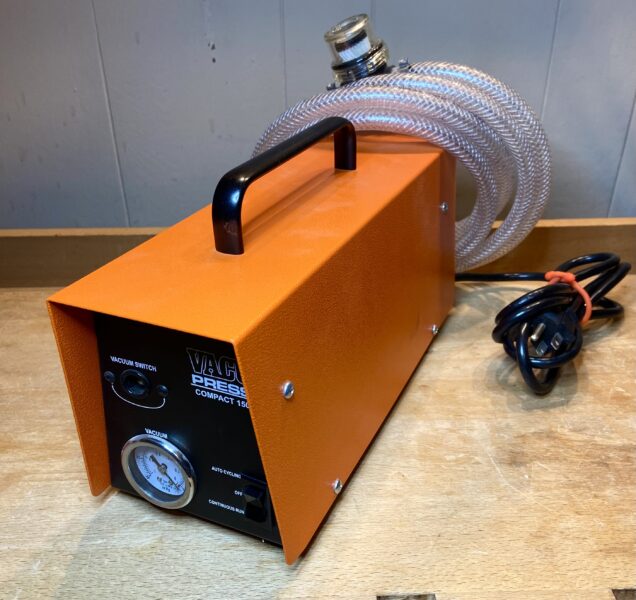
8. Veneer press. My small VacuPress makes veneer paneling much more practical. Pressing with lots of clamps and boards is more difficult and hard to get done fast enough for uniform pressure.
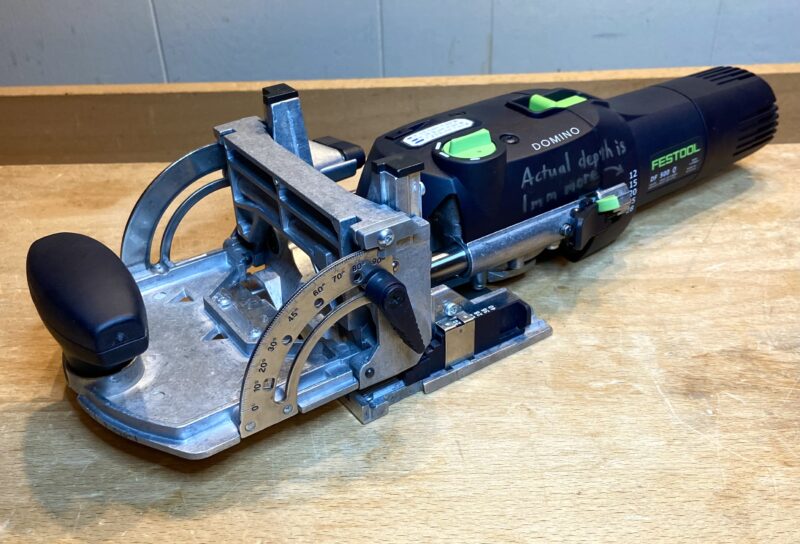
9. Domino. Yes, Domino$. As I discussed in a previous series of posts about mortise-and-tenon joinery and alternatives, a Domino is really handy. As expensive as it is, maybe check on new imitations.
10. Mortiser. Having briefly had one in the past, I think only very high quality is worth using. However, I do not see a need for one at all for most woodworkers. In the few situations where mortises cannot not be routed, they can readily be chopped with good mortise chisels. Buy those instead.
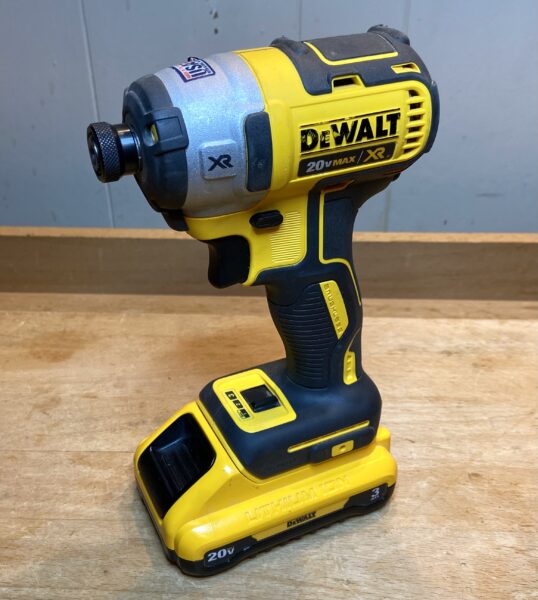
11. Impact driver. Cordless. Generally not necessary for general woodworking but very handy for screw work.
12. Miter saw. Wonderfully accurate to crosscut angles in all directions with the bevel and tilt combination. Beats the table saw for that. This was essential for me to add wall-ceiling molding to most of my house. I later sold it after a while as I found it not essential for my woodworking projects. I probably should have found space for it.
13. Drum sander. Sanding width of 10” or 16” or 25”, etc. These can be helpful for large areas of sanding and some construction things like band sawing your own veneer sheets and then evening the surface thickness. After I owned one for a while, I sold it to open up shop space for things more needed. Some woodworkers find it very helpful though.
14. Track saw. Depending on your work and shop area, this is something to consider. Instead of a table saw? In addition to it? For a quality saw and track, cost is not always a big advantage than many table saws. Space is a storage advantage but not always a real work advantage. To cut up a 4×8 sheet of plywood, the track saw is more workable than most table saw setups. For overall woodworking, I would take a table saw.
Are there more? Yes, of course. But in this series, I have tried to help developing woodworkers (really all of us) build there machinery plan as woodworking advances.
As you build, remember that the 18th century woodworkers built all of their great work without electricity! So, the job can be done. You run the shop. Let the machines work for you!
This has been a 7 part series.
