Is sanding part of almost all woodworking projects? Yup. Is it one of the fun parts? Nope. Yet, it almost always must be done, so we appreciate any available good help.
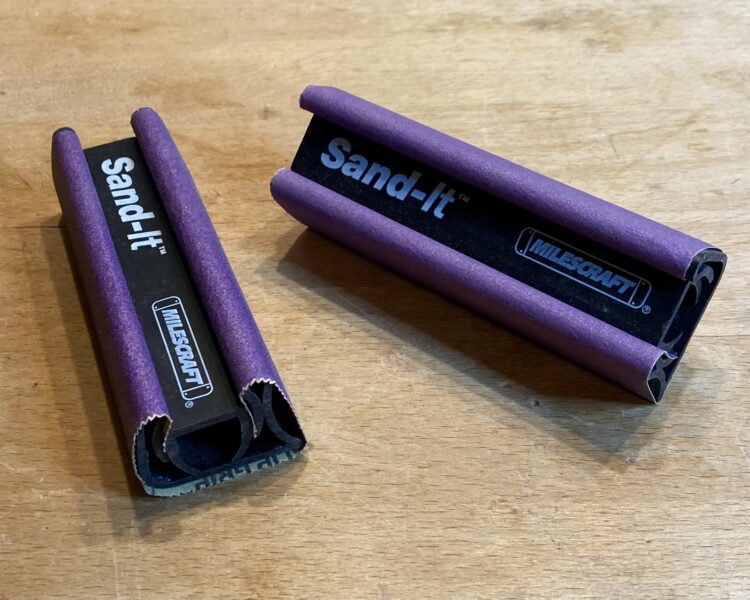
Here is a good one that I recently found and you will likely find helpful too. “Sand-It” is made by Milescraft. (See photo above.) This holds a 4 1/2” square sheet of sandpaper that is just 1/4 of a usual, full 9” x 11” sheet. I am a fan of 3M Pro Grade sanding sheets.
[As always, I do not get money or promotion from any woodworking manufacturer or seller. I buy all of my own stuff, all on my own, without promotions. Everything here is only to help fellow woodworkers! I got these for 7 bucks each on Amazon.]
A square sheet goes in by wrapping it around the frame with the center piece removed, then pushing the center piece in from the top while slightly stretching apart the side panels. That gives the sandpaper a good grip. The sheet comes out of the block by using two hands to mildly separate the curved side panels and then sliding out the center piece.
Here are the seven sanding areas available:
1. flat bottom
2. concave side panel
3. slightly convex side panel
4. wide-curved corner edge at bottom
5. narrow-curved corner edge at bottom
6. curved top edge
7. another curved top edge at a different angle
These are wonderfully practical for sanding curved places, including along with nearby flat areas. One tool in hand does a wide variety of surfaces and curves.
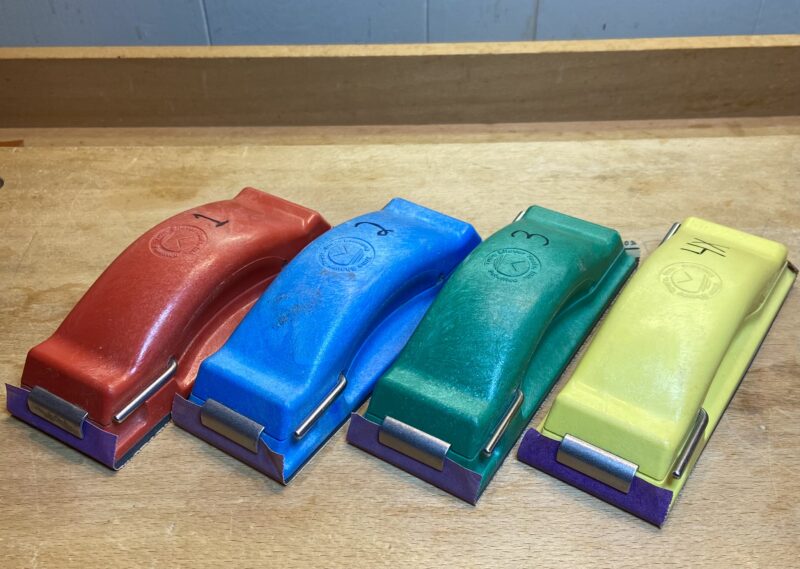
They are, of course, not for sanding large flat areas. For that, I find the Time Shaver Preppin Weapon blocks unbeatable for hand sanding.
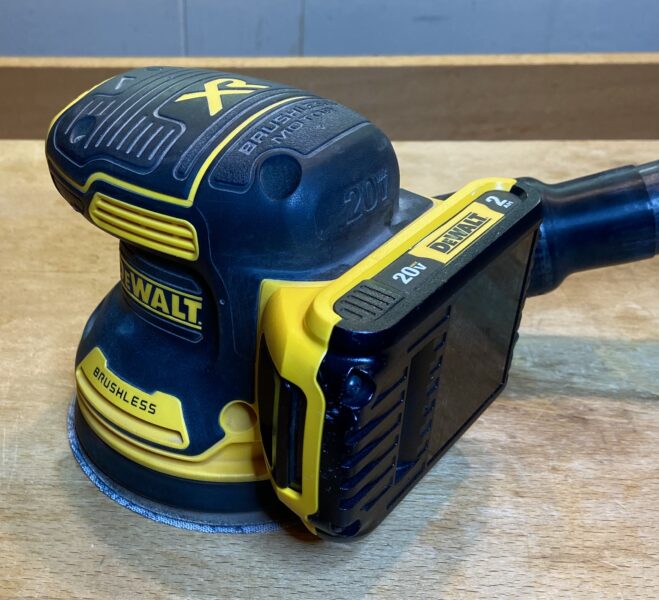
I use the 5” random orbit sander with attached dust collection most of all.
In these other photos, I show a small sample of the numerous other sanding helps in the shop. Some are really used but all do some work at some time.
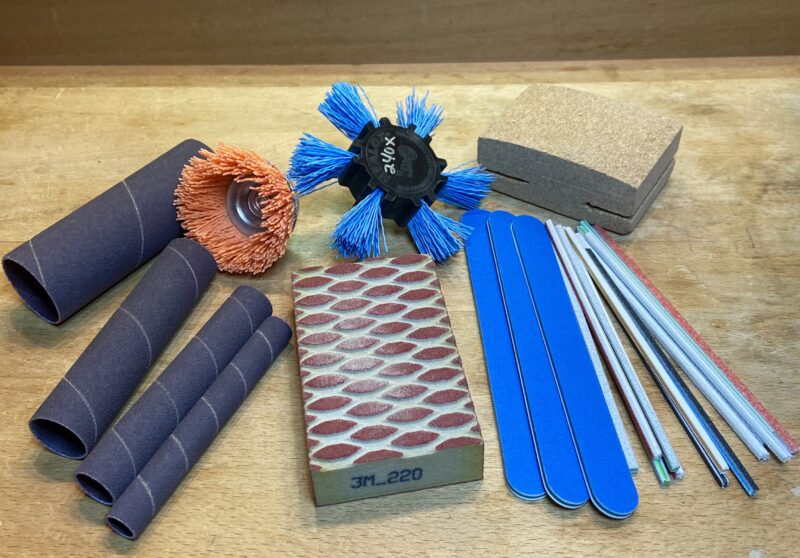
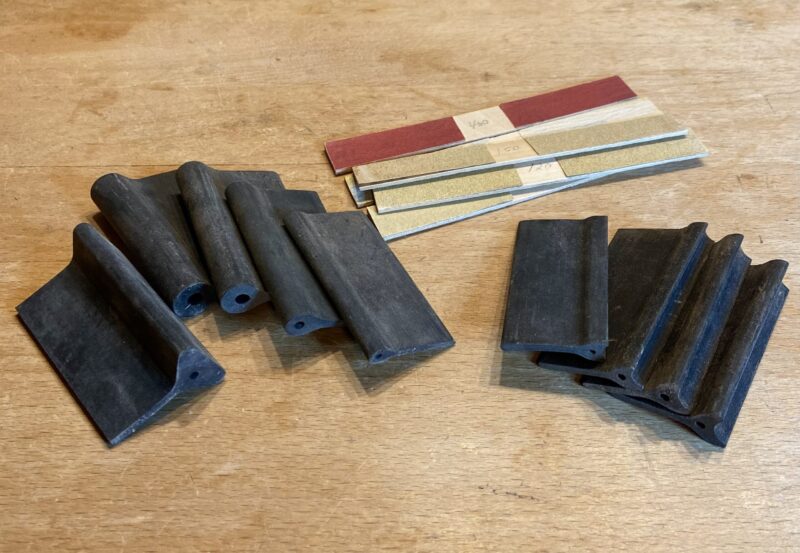
Sanding is, frankly, not really a fun part of woodworking. Yet sanding is often part of actually shaping, which is more entertaining. It all gets the job done though, and it sure helps to have these tools at work for you. The Milescraft Sand-It makes the team.

